








Current UK Lightning Strikes
Updated every 60 seconds
Real-time lightning strike detections across the United Kingdom and Ireland, picked up by the Blitzortung.org community sensor network. Blitzortung volunteers around the world run low-cost VLF receivers that time-stamp the radio pulse ("sferic") each lightning strike emits; by comparing the arrival time of the same pulse at several stations, the network triangulates each strike's location to within a few kilometres. On the map, brighter/fresher markers are the most recent strikes and they fade towards red as they age.
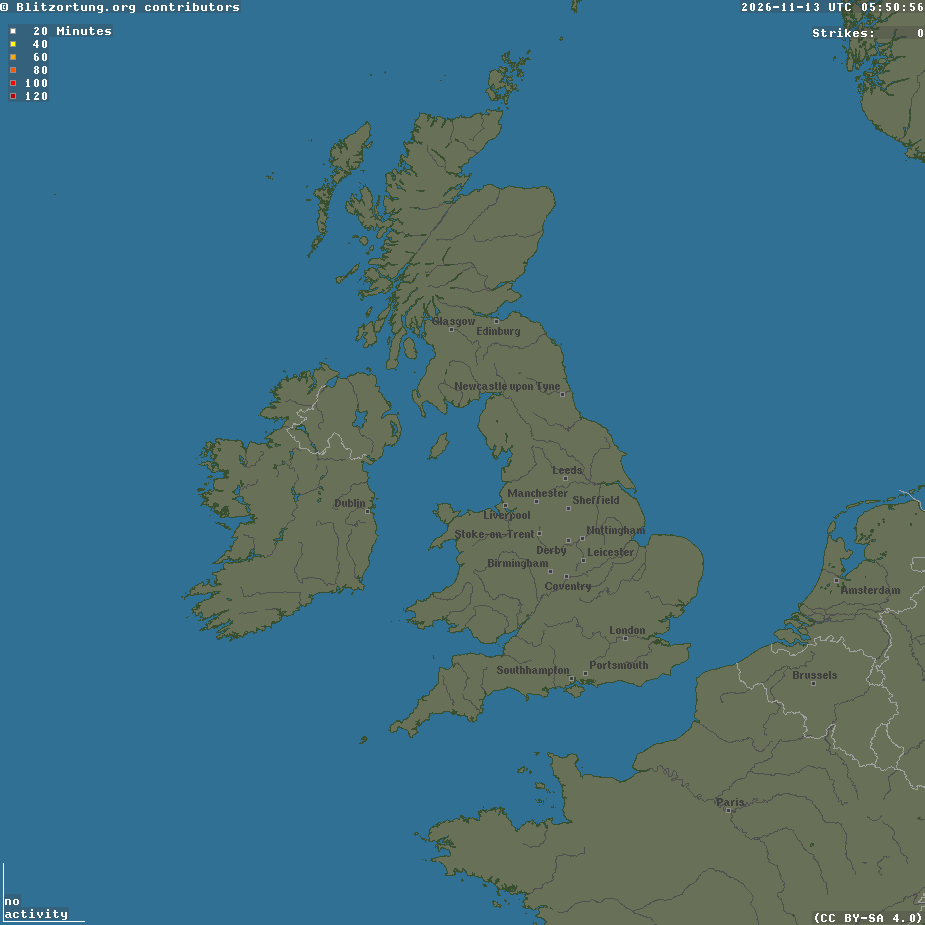
Last refreshed: 06:35:49
Live Interactive Map
Prefer to explore the data yourself? This embed updates continuously in the background — no page refresh needed. Drag to pan, scroll to zoom, and use it to check strike activity anywhere in the UK, not just the Southampton area.
Community-operated real-time lightning detection network
Using this page and staying safe
Compare the strike map with the Rainfall Radar page. Lightning almost always occurs inside the heaviest showers and thunderstorms, so strikes that line up with intense radar echoes show where a storm is, and watching the strikes over a few minutes shows which way it is moving and whether it is heading towards Southampton.
The positions are estimates, and because detection relies on a network of volunteer receivers, a few strikes can be missed or placed a little off, especially far from the receivers.
If you can hear thunder you are close enough to be struck, so go indoors. Sound travels roughly a kilometre every three seconds, so counting the seconds between a flash and its thunder gives you a rough distance.
See also: Rainfall Radar • Euro Lightning